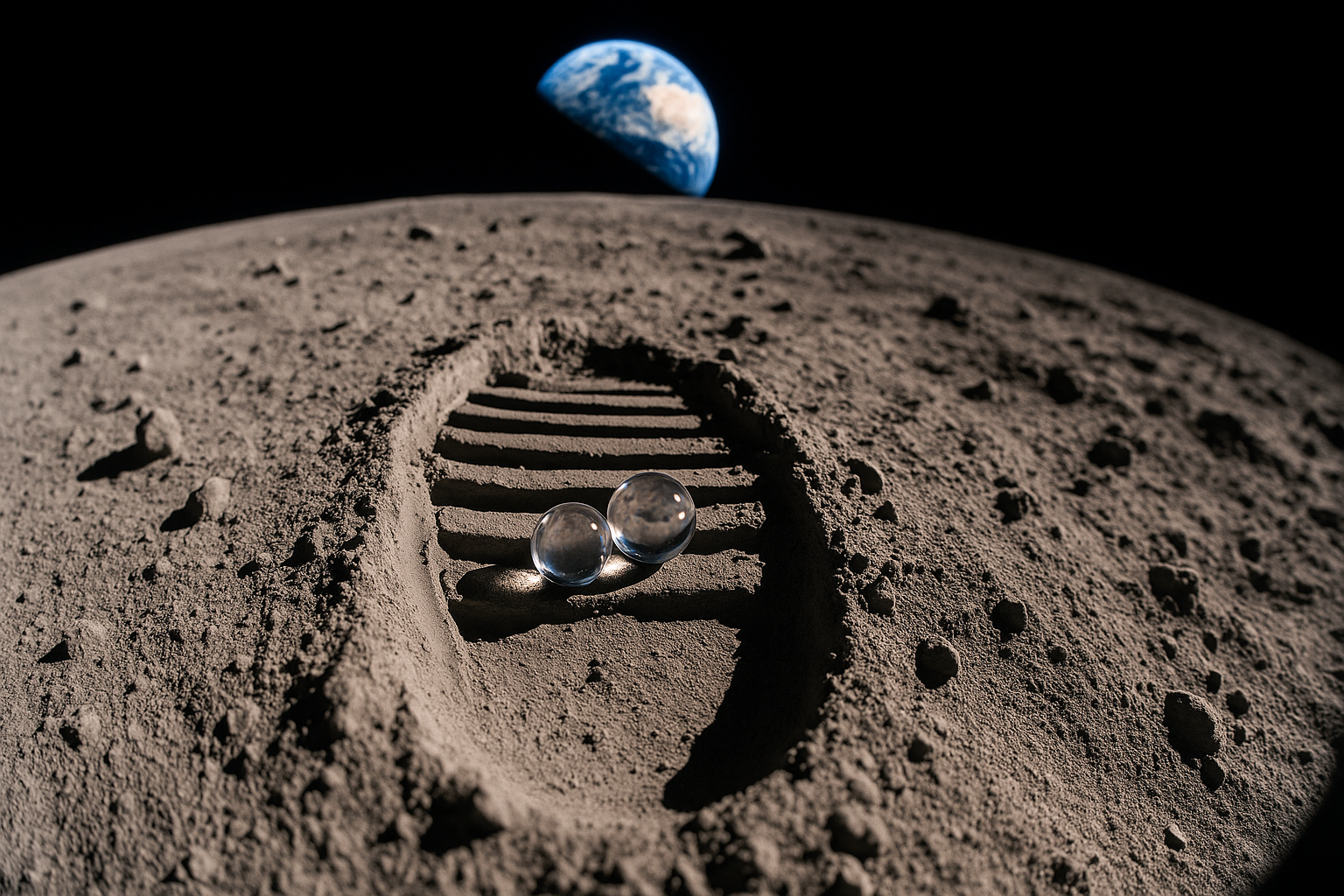
Chinese researchers have identified a unique glass bead in lunar soil samples collected by the Chang’e-5 mission in 2020.
A small fragment, measuring just a few millimeters, was retrieved from the Oceanus Procellarum (“Ocean of Storms”) basaltic plains on the Moon’s visible side.
According to scientists from Nanjing University, led by Chen-Long Ding, the bead formed around 68 million years ago due to a powerful asteroid impact that heated lunar rocks to extreme temperatures.
The bead is primarily composed of magnesium oxide, which contrasts sharply with the volcanic rocks dominant in the region.
It is believed that the impact responsible for creating this bead was strong enough to eject material from the Moon’s upper mantle to its surface. This discovery provides a rare opportunity to study the Moon’s inner layers, which are typically inaccessible.
Researchers also link the bead’s origin to the ancient Imbrium Basin, which formed about 4 billion years ago and likely left mantle traces on the lunar surface.