Artillery duels, minefields and historical grievances. Why did Thailand and Cambodia still not divide the border? We analyze the military capabilities, political games and the chances of a big war.
Against the backdrop of world showdowns, the conflict of Thailand and Cambodia no longer surprises anyone, although for the majority (at least in the Russian Federation) its reasons are incomprehensible at all.
The chances that he will develop into a serious confrontation a little, rather, is already quite familiar, he will limit himself to a border conflict, he will not even reach missile strikes … Let’s try to explain why.
Nevertheless, the conflict itself already clearly shows a new trend in world politics – aggravation, we will talk about this.
The reasons for the conflict
It is hardly possible to describe briefly all the difficult intricacies of local history in a pair of proposals. But you have to do it somehow.
The Khmers (in the future, the campaigns and Cambodians) had a strong empire in the western, northern and central part of Indochina in the 7–9th centuries. The ancestors of modern Thais lived in the south of China (Yunnan Highlands), from where they went further south, mastering the fertile valleys of local rivers, weakly populated by Khmra and their related mones.
Cambodian monarchs appreciated warlike Thais – they, being vassals, defended the northern borders of the empire. With the weakening of the Khmer Empire, Thais began to build their state, so by 1238 they threw off the power of the Khmer and created the power of the cloth – it changed many names, but we have known as Siam, and since 1932 it was Thailand. Thais created their empire, conquered many neighboring territories.
In the period of Western colonization, Siam retained the sovereignty and did not become a colony, unlike the neighbors – Cambodia went to the French, and Burma (Myanmar) to the British. The French forced Siam (apparently, under the pressure of local) to transfer several Khmer provinces, especially the territory of the ancient capital of the Khmer Empire of Angkor and the famous temple complex of Angkor-Vat. In the same “package”, territories were transferred with the temple of Preakhvichea (in the province of the Preeah-Vichea)-it is precisely because of it now the whole cheese-brow.
When the French left in 1953, giving the independence of Cambodia, Thailand introduced the troops into the disputed areas, but was obliged to withdraw them, according to the decision of the International Court in 1959. Then “red khmers” led by Paul later come to power in Cambodia. Through the province of Preeah-Vichea, the masses of refugees and armed opponents of the regime went to Thailand. Red Khmers captured the province and ruined the temple.
Southestasiaglobe.com
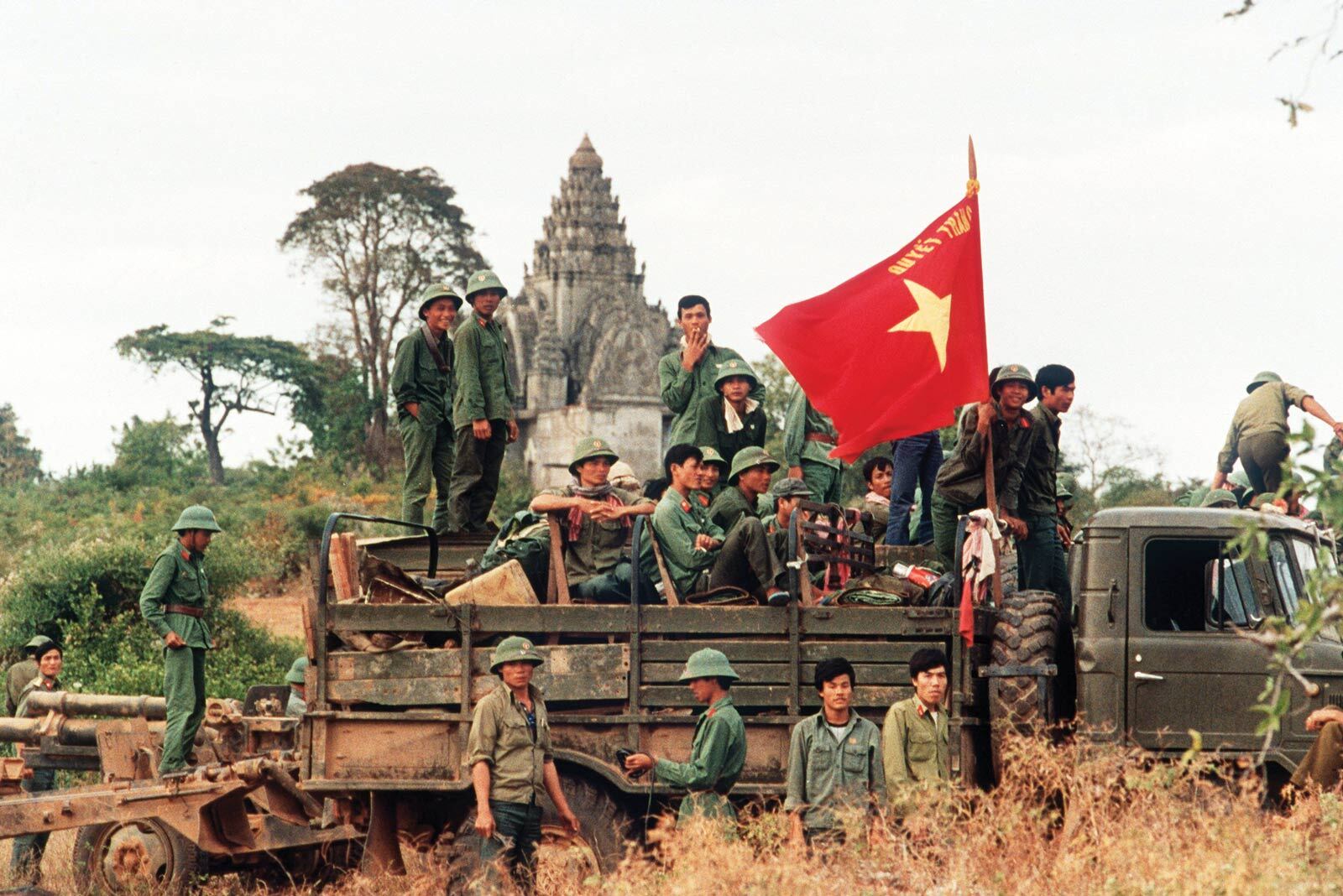
In 1978-1979, the Vietnamese invaded the Red Khmer Cambodia and cleaned the country. In the border provinces, half-to-the-people’s shortcuts were hidden, who overseas there until the 1990s. Thais, in turn, brutally expel the Cambodian refugees back, forcibly dropping from cliffs and driving through minefields. For a long time, chaos reigned on the territory of the province, and belonging and control were very slurred.
In 2008, the temple complex of Preahvichea was included in the UNESCO World Heritage List and Cambodia and Thailand began to argue again due to the affiliation of the territories. In 2011, the border conflict began – the Thais introduced the troops, and as a result of shelling the temple suffered. After three -day battles, 10 people died on both sides. The conflict was not extended, it was frozen.
The balance of power
And with the naked eye you can see the serious superiority of Thailand over Cambodia.
Thai’s armed forces about 360 thousand peopleOf these, 245 thousand in the ground forces. Cambodia has 125 thousand And 85 thousand in the ground forces – there is a triple concession in the number of manpower in the potential battlefield. That a bad sign for Cambodia in itself.
Thai technique
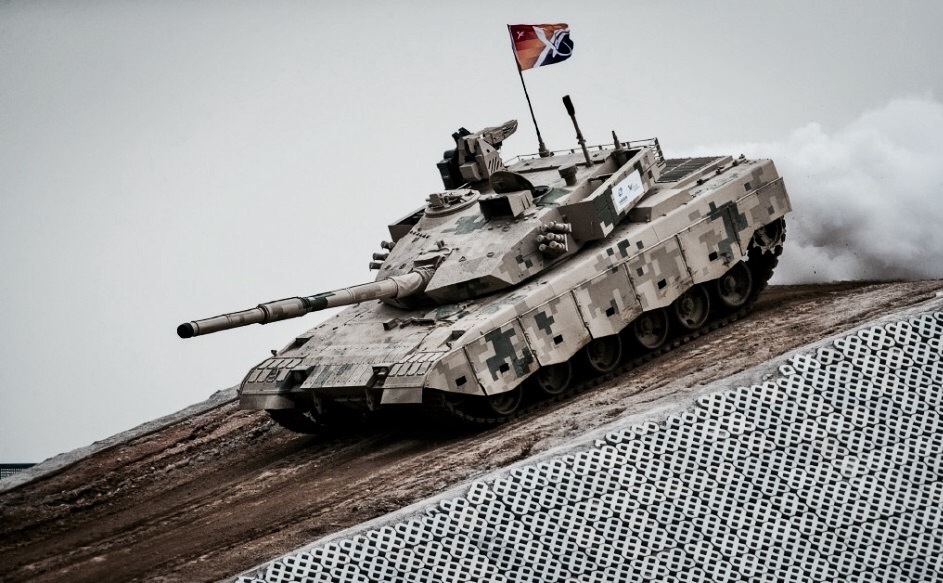
The tank fist consists of 28 (or 49, the process of procurement and supply goes) of Chinese export tanks VT-4, according to the characteristics of loved ones to our T-90M. At the moment, Thais plan to gradually switch to such a car completely, replacing the colorful honeycomb of American tanks in the middle of the last century. Earlier, Ukrainian BM Oplot claimed this role, but the Ukrainians could not ensure the stable quality of military equipment in serial production. Nevertheless, there are a battalion kit (49 cars) of “strongholds”, is it even more? than in the Armed Forces of Ukraine.
The rest is about 200 American M60 American tanks of different modifications, 105 completely old post -war M48 Patton III.
The Thai infantry uses an armored personnel carrier (or light wheel BMP) of Ukrainian production BTR-3E, quite highly appreciated during its, including Russian military. There are 234 units, we add 430 American old BTR M113 to them, and approximately similar Chinese type 63 in 450 units. It is quite possible to judge the weak mechanization of Thai infantry, relatively modern armies.
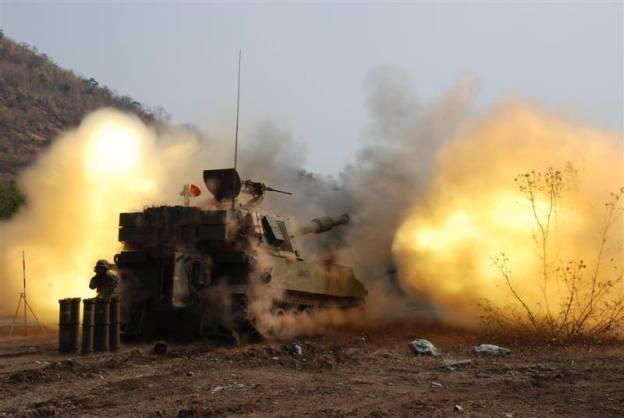
The artillery is represented by 6 new French howitzers Caesar, and 20 not the most modern American howitzers M109A5, the rest of 200 Canadian towed 155 mm GaUbits GC-45. You can add 60 130 mm lungs to them, and 18 heavy 302 mm of Chinese MLRS (some Thais are made under a license).
Thaimilitaryandasianregion.wordpress.com
From the air, Thai troops will support 57 F-16 early modifications, 37 outdated American F5 fighters, and more modern Swedish 4+ generations Saab Jas 39-12 pieces. Of the air defense is mainly MANPADS, manual and on self -propelled platforms, plus the cannon complexes of Soviet, Chinese and American origin.
Cambodian technique
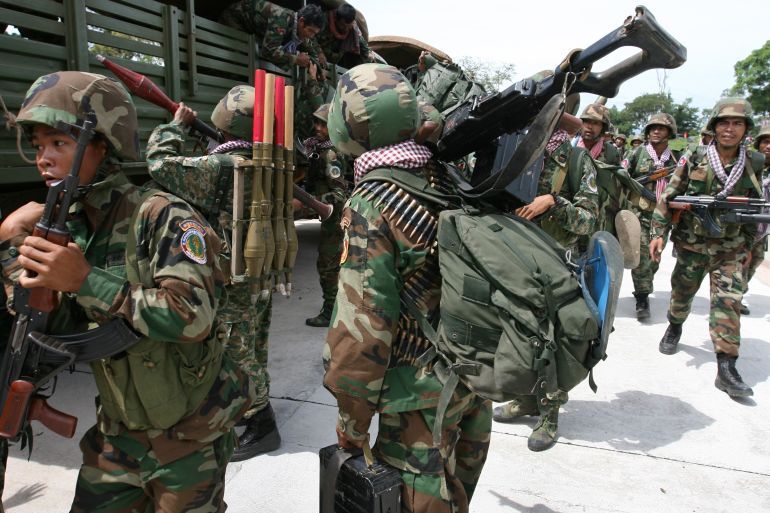
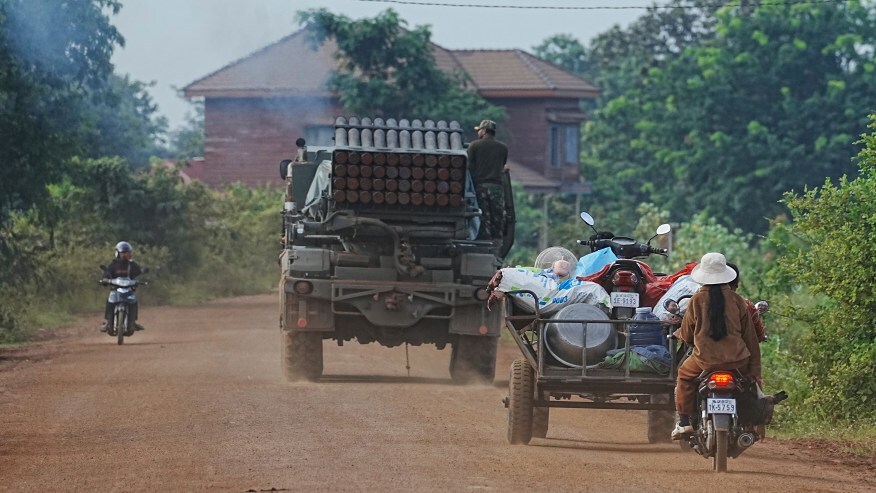
In short, it can be said that the Equipment of the Cambodian army is the army of the USSR in the early 1960s, or the Chinese army of the 1970s. The main tanks of the T-54/55 of Soviet, Chinese or Eastern European production (500 cars). Motor-proof uses BMP-1 (200) and BTR-60PB (300), plus other similar machines, including older ones. The artillery is represented by the Soviet barrels of the post -war period and their Chinese modifications – 122, 130 and 152 mm (450) and MLRS.

Access
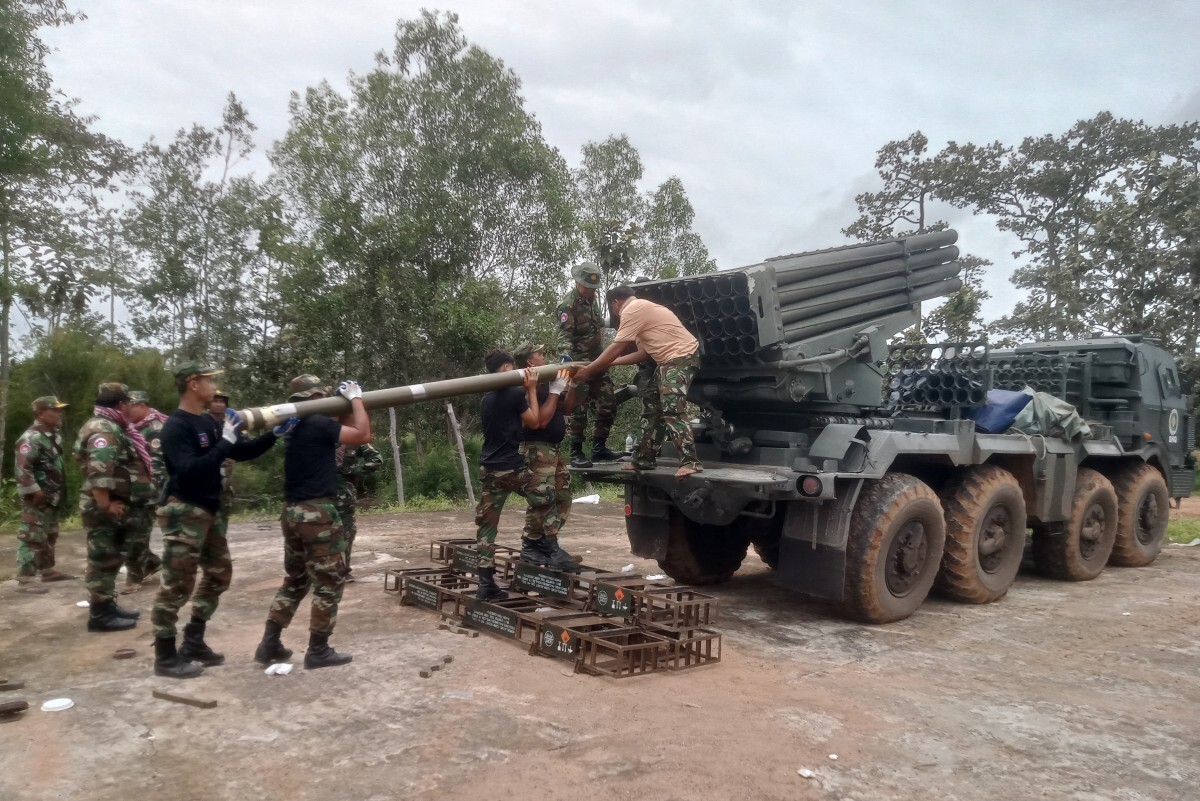
The most modern of which BM-21 Grad (200), 125 of their Chinese and 50 Czechoslovath modernizations. There are launching Soviet post -war sample. Of the latest systems, Super-lean MLRS Chinese, with high-precision starting (tactical missile systems) PHL-03.
Cambodia lost all her aviation during the Vietnamese invasion, after which she purchased transport aircraft and helicopters for the needs of the army. Air defense is represented by obsolete Chinese MANPADS and cannon/machine -gun attitudes.
Conflict prospects
We can clearly judge that there will be no “Indo-Pakistani” script. The basis of the firing means of both sides is artillery, and not the most modern. The tactical missile systems, especially the long-range missiles, do not have any deep attacks on military infrastructure. Although Thailand has a relatively modern shock fighters in the arsenal that can cause such damage, but their capabilities of the OGR are Anichens.
AFP
Basically, the fighting will be terrestrial clashes with the abundant use of artillery – this is fraught with large losses of the civilian population and destruction in the area of direct clashes. Of course, for sure in recent years, both sides have been worried about the purchases of modern drones, first of all they will allow you to get detailed intelligence.
But artillery systems (except for several French howitzers near Thailand) are not equipped with modern automatic fire control systems (Asuno), which will not allow you to promptly enter and pointarily hit the targets of shells through protected data transfer channels. It will be the artillery war of the “large batteries” with intensive shelling “in the squares” and high expenses of ammunition, and “approximate” target designation.
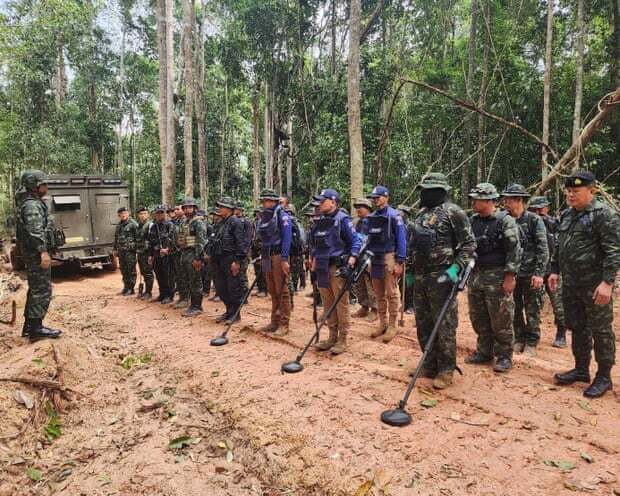
Surely both sides are aware of this, which allows us to hope that the confrontation will not go beyond the border conflict, will remain with the use of small arms, limited artillery strokes and the strengthening of mine-engineering barriers. Both armies are not modern enough, especially Cambodian. In such conditions, it is probably worth expecting the lack of reliable acceptance-transmitting devices, and with them friendly fire, erroneous target designation with blows to civilians.
Access
Cambodia is significantly inferior in numerically and efficiently, in terms of objective parameters all the advantages of Thailand. However, it is important to understand that the area in the disputed territories is wooded – the same “red khmers” and other rebels have long and successfully hid there. It will not be so simple to realize the advantages on Earth by Thais that it makes you expect a sluggish, but very bloody confrontation.
World context
For both sides, this is a fundamental conflict, it goes not just for disputed territories, but also valuable in the historical and cultural sense, although the temple of Preahvihea Hindu, and both sides are almost completely Buddhist.
The situation is complicated by influential military lobbies, considering the decision of the conflict by the issue of honor and military prestige. In Thailand, on July 1, the prime minister of the country Phthhongthan Chinavat was removed, for the call to the former Prime Minister Cambodia, where she complained about the pressure of the military, and expressed an understanding of the Cambodian side. The country is already balancing on the verge of military dictatorship that on the one hand exacerbates the political crisis, and on the other hand threatens the escalation of war.
Against the background of world instability, countries are increasingly related to military decisions of old contradictions. The UN is already poorly able to control the situation, and the “world policeman” represented by the United States is increasingly indifferent to the previous role, focusing on internal problems.

The absence of arbitrators allows various powers claiming local hegemony to move on to active actions. We see that now there is no power capable of putting pressure on both sides and leading to a new frost, although Trump has already intervened and there are already reports about the possible meeting of the prime ministers of the countries with the possible mediation of the United States. While the voltage with flashing flashes continues.
Nevertheless, the situation itself indicates the “normalization of war” in the modern world and the increasing readiness to solve problems in this way. Moreover, world hegemones may soon not become opportunities, and even desires, to serve as intermediaries, until the winners will be revealed in the confrontation.