
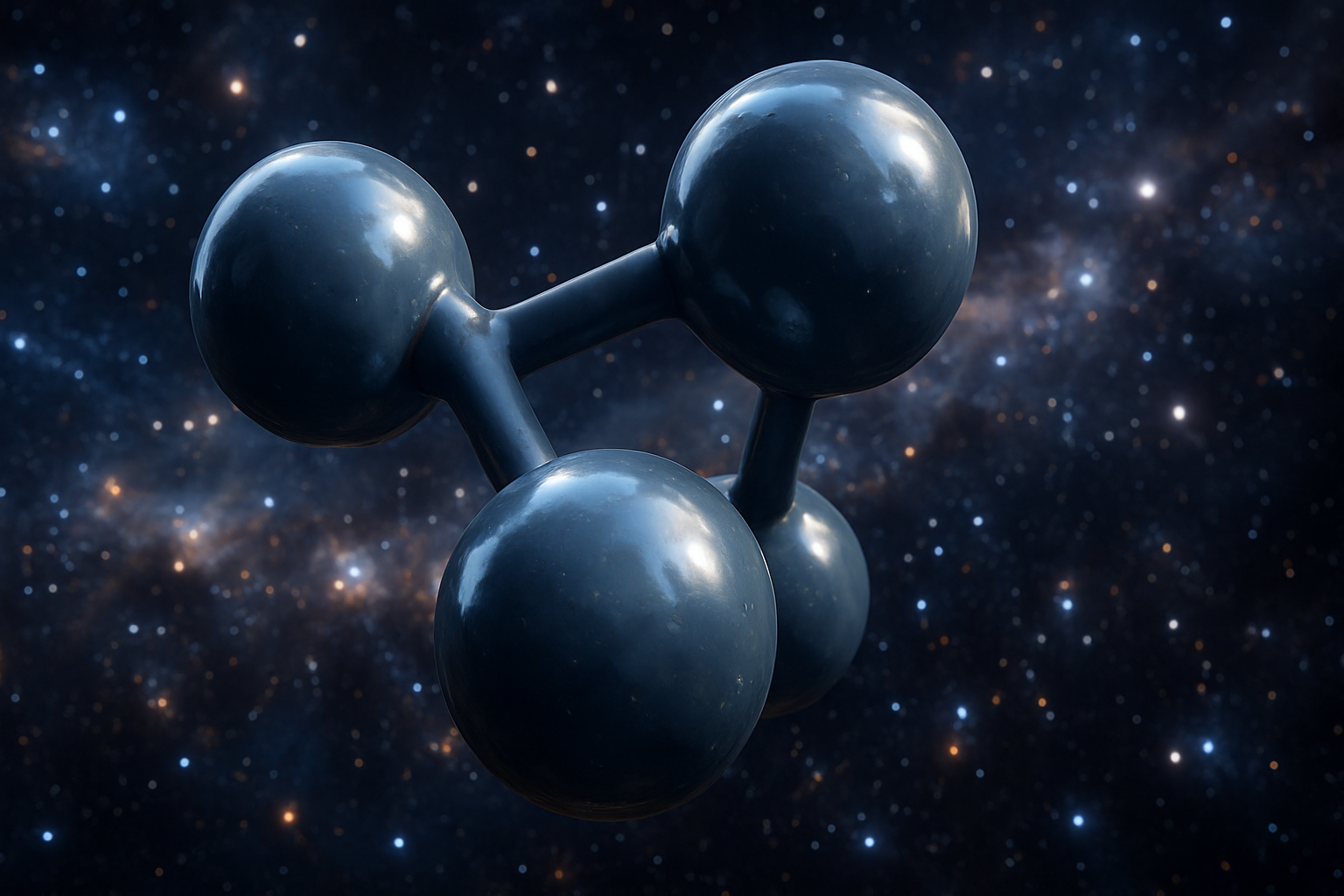
A group of researchers from the Max Institute Planck in Germany was able to recreate the first molecule in the Universe – Helius Hydrid (Heh⁺). She, as it turned out, played a much more important role in the formation of stars than previously considered.
This molecule formed shortly after the Big Bang, when the first elements appeared – ionized hydrogen and helium.
It is believed that helium Hydrid helped primitive gas clouds to lose heat and contract, creating the conditions for the birth of stars.
As part of a unique experiment in the cryogenic installation of Cryogenic Storage Ring, scientists observed how Helium Hydrid is faced with deerium – a heavy isotope of hydrogen.
It turned out that even at extremely low temperatures (up to -267 ° C), the reaction between the molecules does not slow down, contrary to the previous scientific forecasts.
Such reactions lead to the formation of molecular hydrogen, which acts as a cooler for gas clouds. It is already known that a fresh discovery requires a revision of ideas about the chemistry of the early Universe and the role of Helium Hydrid in cosmic evolution.