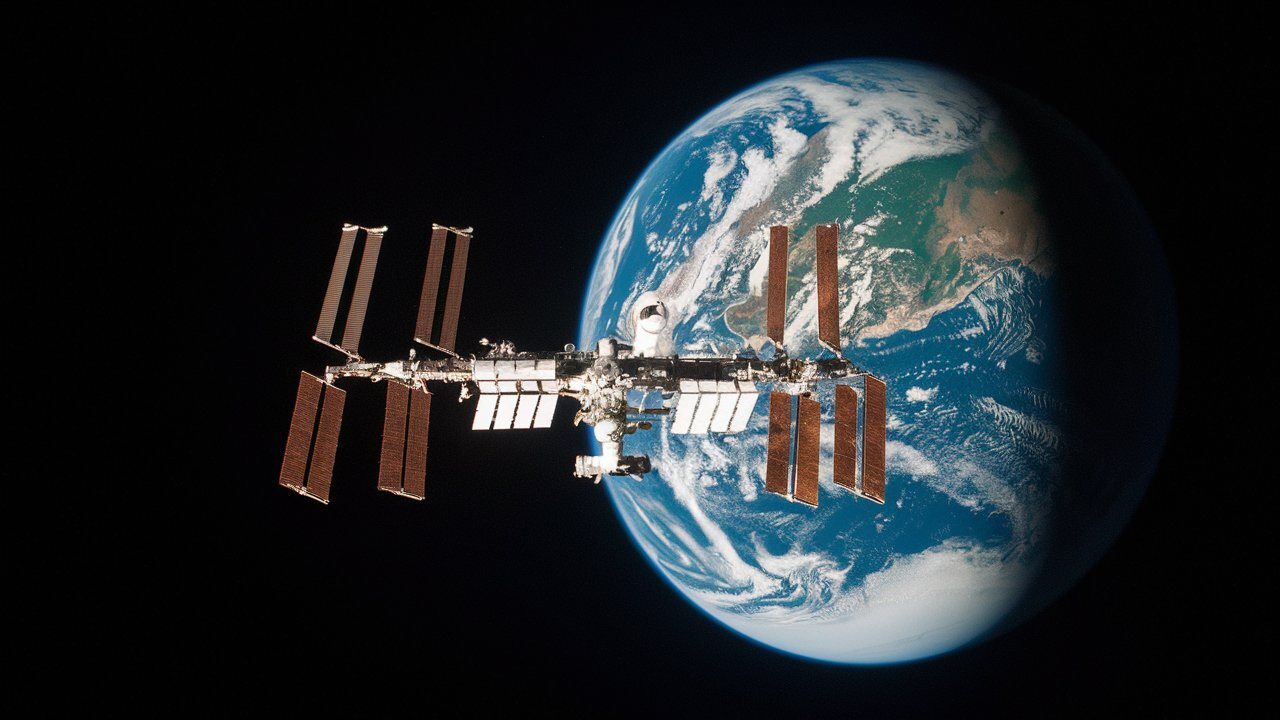
The International Space Station regularly corrects its orbit in order to stay at the desired height. At the level of about 400 km above the ground to the station, the residual atmosphere operates, which is why it gradually decreases. Today at 7:28 Moscow time, the MS-30 progress engine turned on at 647.3 seconds, creating an impulse of 1 m/s, the Roscosmos reported.
As a result, the ISS orbit rose 1.7 km and now amounts to 416.7 km above the surface of the earth. Maintaining the desired height is important for several reasons.
The station loses hundreds of meters or even several kilometers every month, especially with increased sun activity, which heats the atmosphere and increases the resistance. In addition, adjustments are carried out before the arrival and cutting of ships, as well as for safe evasion of cosmic garbage.
The maneuver passes simply: the engines of the Progress ship are included in a pre -designed time, create the desired impulse, and the orbit of the station changes to a given height.
Regular adjustments help the ISS stay in safe orbit and ensure the normal conduct of scientific experiments and flights of spacecraft.