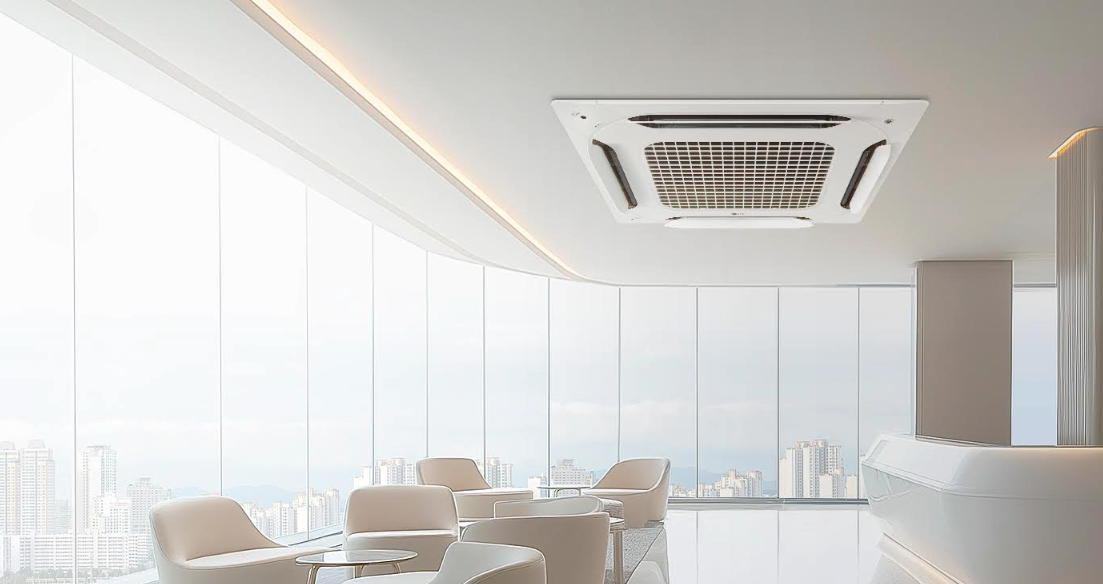
LG Electronics began to use an updated production process for commercial cassette 4-flow air conditioners aimed at reducing the negative environmental impact. The company reduced plastic consumption and carbon dioxide emissions, introducing new material for the manufacture of external panels and changing the approach to production.
The international organization Tüv Rheinland confirmed that the new changes have reduced the carbon trace of one device to 14.85 kg of Co₂-Equilant. The company emphasized that such a result was achieved not only thanks to a change in technology, but also by the transition from acrylonitrilbutadianstyrene to polypropylene, which has a smaller carbon trace.
LG also uses the foaming method when casting under pressure, when gaseous nitrogen is injected into the shape and forms bubbles inside the material. This made it possible to reduce plastic consumption by about 900 grams for each unit of production. According to the company, the annual decrease in plastic consumption will be about 270 tons, and the annual reduction in carbon emissions – more than 4400 tons.
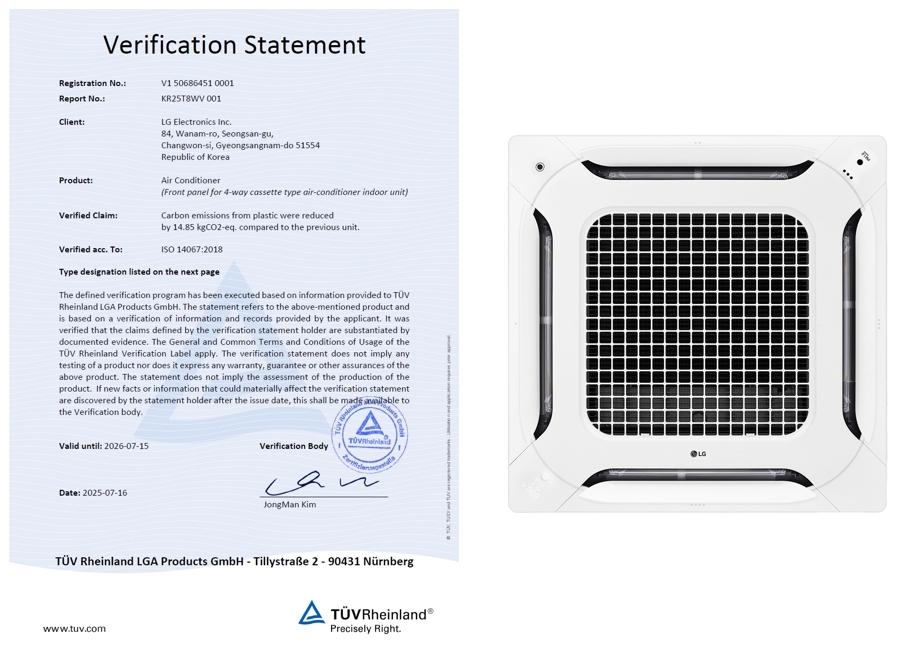
The technology has already been used since June of this year in the production of cassette air conditioners of a 4-flow type and, as expected, will gradually begin to be used in other models for residential and commercial premises.
LG adheres to a carbon neutral strategy and plans to reduce the volume of greenhouse gas issues by 54.6 percent by 2030 compared to the 2017 level. For this, the company uses highly effective equipment, renewable energy sources and its Core Tech technology.