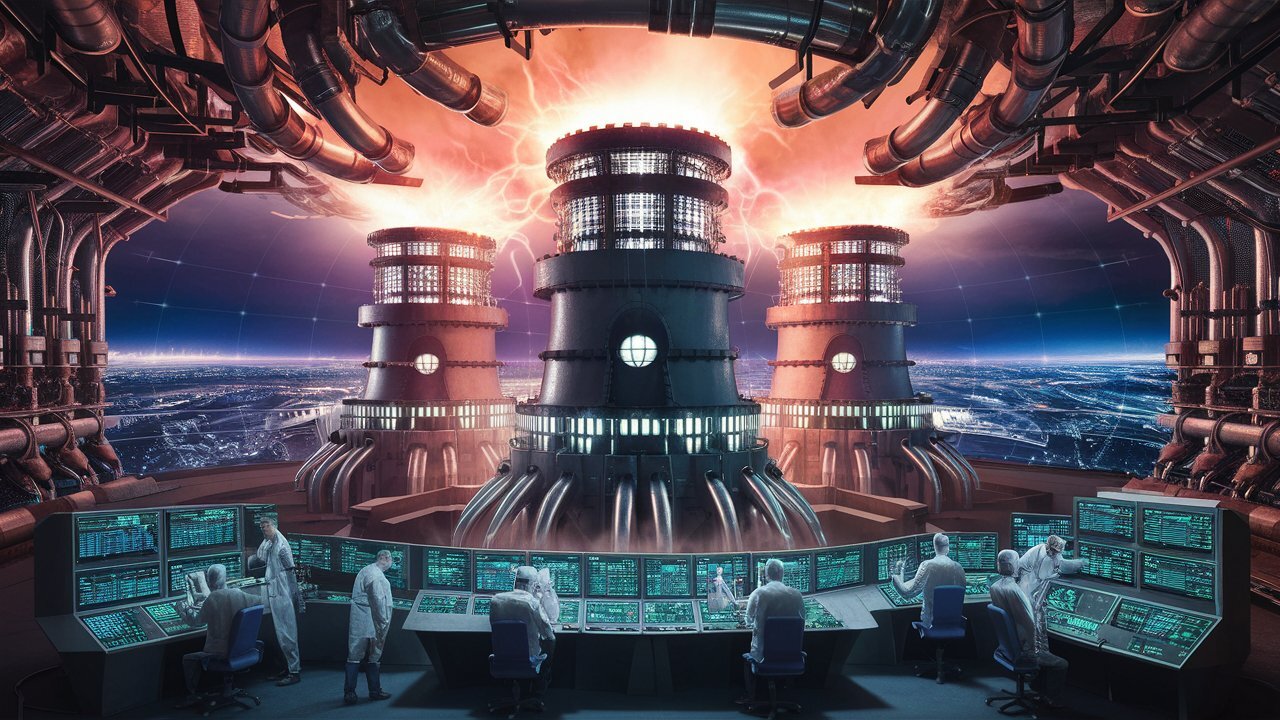
Specialists from the MIPT and the Kurchatov Institute have developed a theoretical model that more precisely describes the emergence of the vertical instability of plasma in Tokamaki – one of the types of thermonuclear reactors. This phenomenon is considered one of the most dangerous installations during operation.
The plasma cord in Tokamaki warms up to hundreds of millions of degrees. To increase the effectiveness of the reactor, they give it an elongated form, but this increases the risk of plasma displacement up or down. Such displacements can lead to damage to the walls of the reactor.
Previous models required the perfect compliance of the form of plasma and vacuum chamber, which does not correspond to real conditions. The new technique allows you to independently analyze the geometry of the plasma and walls of the reactor. This makes the calculations more accurate and universal for different installations, including the ITER international reactor under construction.
Development has already shown better consistency with experimental data compared to early approaches. In the future, it will help create more reliable Tokamaki management systems and optimize the design of their key elements.