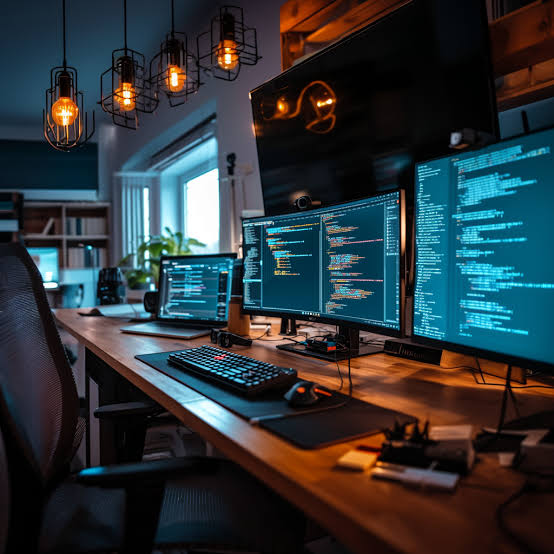
In the modern era, nearly every aspect of our daily lives—from the smartphones in our pockets to the systems governing global finance—is powered by a hidden language. This language is the foundation of software programming, a discipline that has evolved from a niche academic pursuit into the literal engine of the 21st-century economy.
At its core, programming is the process of giving a computer a set of precise instructions to perform a specific task. While we interact with polished interfaces and colorful icons, the computer is actually executing thousands of lines of code written in various programming languages, such as Python, Java, or C++.
Think of a programmer as a chef writing a recipe. If the instructions are vague, the dish fails. In programming, if the logic is flawed, the software “crashes.” This requirement for absolute clarity is why programming is often described as a blend of logic, mathematics, and creative problem-solving.
Creating a functional application is rarely a solitary or instantaneous act. It follows a structured path known as the Software Development Life Cycle (SDLC). This process ensures that the final product is reliable, secure, and user-friendly.
Just as human languages vary by region and purpose, programming languages vary by function.
- Web Development: Languages like HTML and JavaScript build the websites we browse daily.
- Data Science: Python has become the gold standard for Artificial Intelligence and analyzing massive amounts of information.
- Systems Programming: Languages like C++ and Rust are used to build the operating systems (like Windows or macOS) that allow hardware to function.
We no longer live in a world where “coding” is only for scientists. As automation and Artificial Intelligence continue to advance, understanding the basics of software becomes a form of digital literacy. It allows us to understand not just how to use technology, but how that technology is shaping our privacy, our work, and our social interactions.
Software programming is more than just typing on a keyboard; it is the art of building the tools that define our future. As we move forward, the “Digital Architects” writing this code will continue to be the primary designers of the world we inhabit.
Meryem AMANDURDYYEVA
Student at the International
university for the Humanities and Development