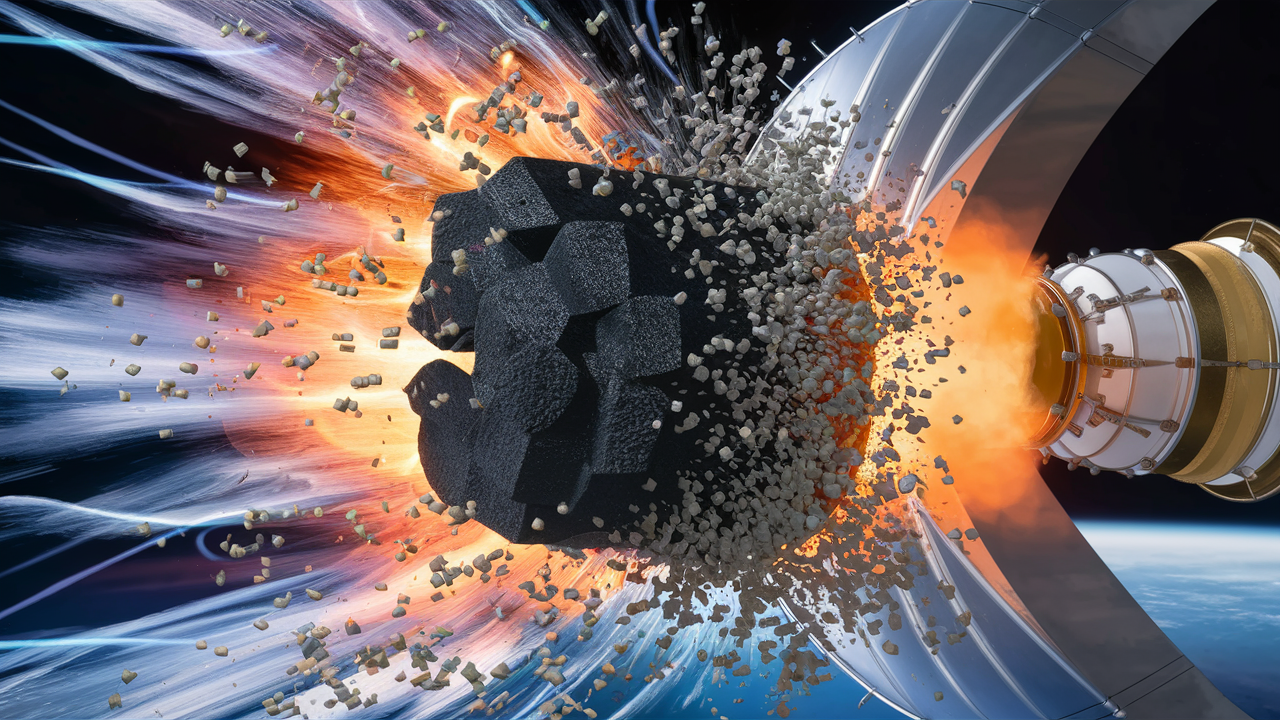
In the press service of Moscow State University. MV Lomonosov reported that scientists of the Research Institute of University mechanics discovered unexpected properties of graphite used in the thermal protection of spacecraft. It turned out that under the influence of shock waves, this material is destroyed not by melting or evaporation, but by mechanical failure of microparticles.
The experiments were conducted at the “shock pipe” installation, where scientists model the extreme conditions that spaceships face at the entrance to the atmosphere. Observations showed that the surface of the graphite is subjected to mechanical destruction, and not thermal effects, as previously expected.
As explained by Vladimir Levashov, the head of the laboratory of kinetic processes, the reliability of the heat -protective layer is critical for the safety of space flights. Most modern coatings are created on the basis of carbon materials, so understanding the mechanisms of their destruction will develop more effective protective systems.
This discovery is especially relevant for promising reusable spacecraft, which should withstand multiple entrances to the atmosphere. New data will help engineers select optimal materials and thermal protection structures.