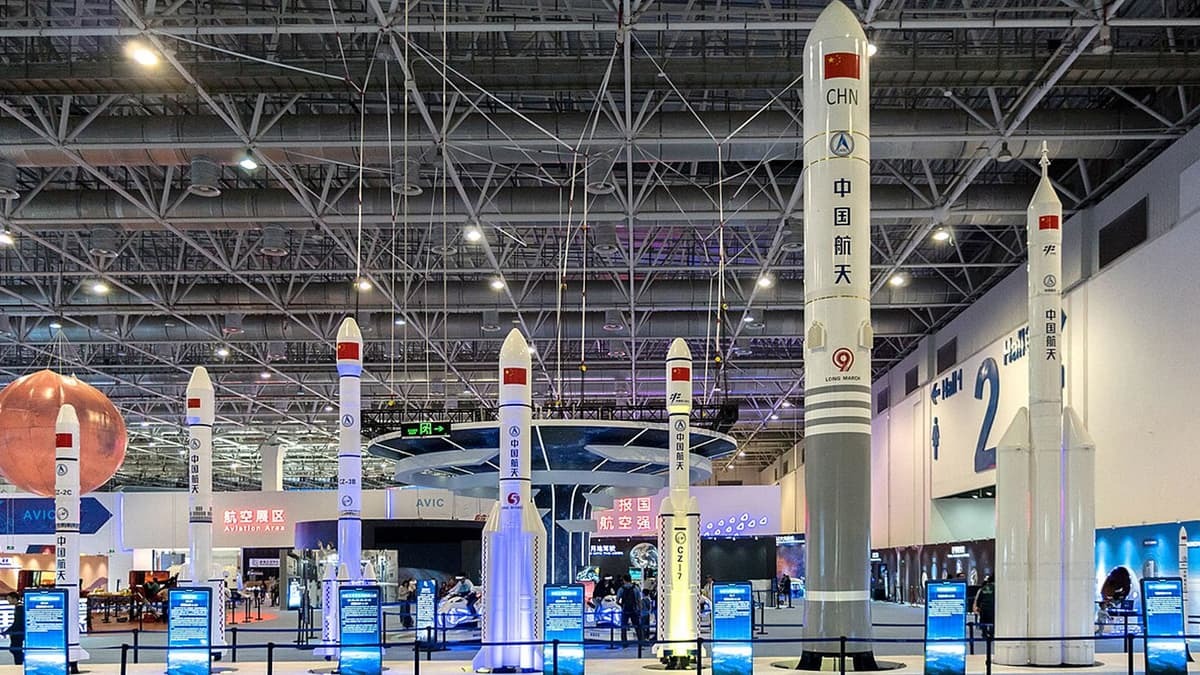
China successfully conducted key firing tests of the first stage of the Long March-10 missile, which will become the basis for the first manned mission to the moon.
At the Hainan Island Cosmodrome, the seven YF-100K engines were launched at the same time, having worked for 30 seconds and developing about 900 tons of traction.
Engineers confirmed the stable operation of the system both in the standard and in forced mode, collecting a complete set of data for further improvements.
Long march-10 is noticeably more powerful than previous Chinese media: its total thrust is almost three times exceeds the Long March-5 indicators.
A fully assembled missile 92 meters high will be equipped with 21 engine, including two side accelerators. It is able to send up to 27 tons of payload to the moon.
According to the plan, the mission to the moon will require two launches: the Mengzhou ship with the crew and the Lanyue module for planting. The devices will meet in orbit, after which the taiconauts will be able to land on the surface.
China expects to land until 2030, and by 2035 to build a constant lunar ILRS base on the South Pole.