Russian scientists proposed using seismic tomography methods for the development of geothermal energy in Alaska. Of particular interest is the volcano for a picture where the magmatic focus is located at a depth of less than 1 km.
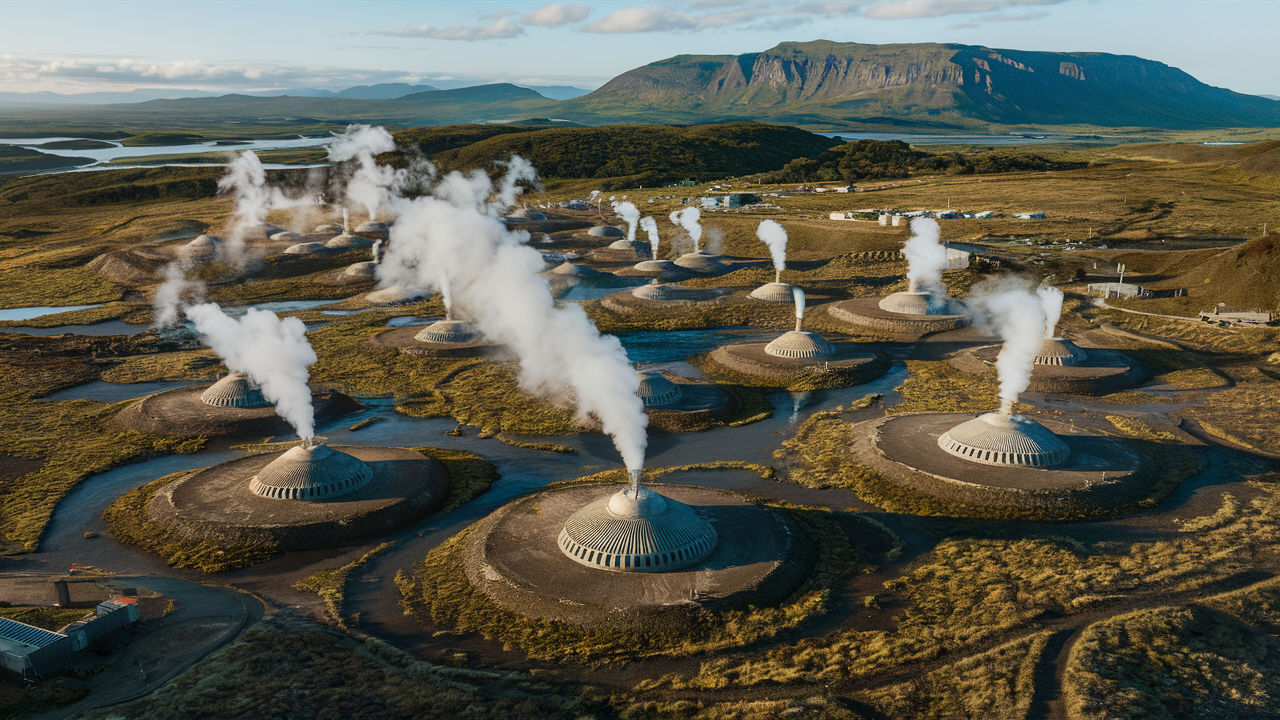
Ivan Kulakov, a corresponding member of the Russian Academy of Sciences, explained that the technology allows you to accurately determine the location of magmatic foci. When drilling wells in such areas, you can get high temperatures sufficient to generate energy. Even in dry rocks, the pumped water turns into steam, which can be used to work turbines.
The Volcano Office is one of the most active in North America. Over the past 30 years, he erupted twice, the last time in 2008. Russian studies have shown that its magmatic hearth is close to the surface, which makes it promising for geothermal projects.
Now such technologies are already used to work with dry hot rocks. They are cheaper than traditional methods – drilling depth is about 1.5 km instead of 4-5 km. This significantly reduces the cost of building geothermal stations.
In Alaska, geothermal energy is still poorly developed due to the low density of the population and the availability of hydrocarbons. However, its development could contribute to the production of environmentally friendly hydrogen.
The scientist emphasized that international cooperation is necessary for the implementation of such projects. Russian methods of seismic tomography can be an important tool for finding promising areas around the world.