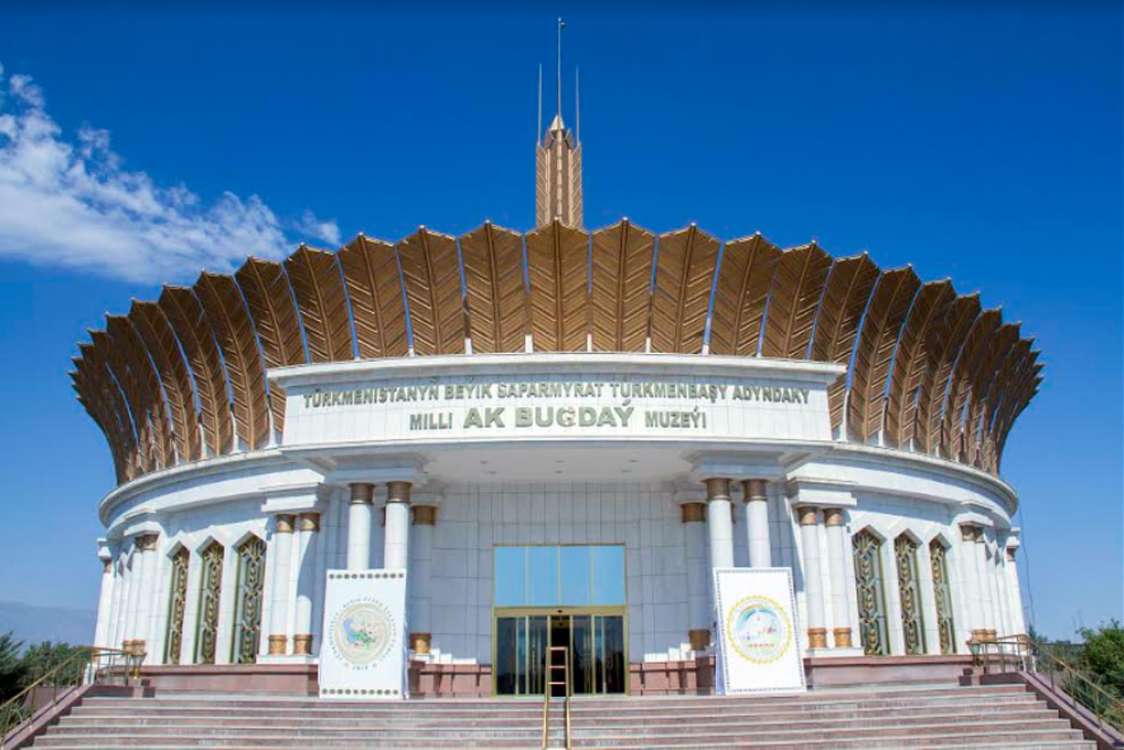
Turkmenistan has ceremoniously marked the 20th anniversary of the “Ak Bugdaý” National Museum, which reflects the deep historical roots of the Turkmen people’s agricultural culture. The museum was inaugurated on July 15, 2005, and has since become a vital part of the country’s cultural heritage.
Located in the city of Änew near Ashgabat, the museum is recognized as the only one in the world dedicated to the history of wheat. Its exhibits explore the emergence of wheat in human life, early agricultural practices, and modern farming technologies.
The museum building spans 3,690 square meters and reaches a height of 21 meters. Its architectural design is crowned with a wheat-head-shaped ornament, symbolizing its thematic focus.
The museum houses over 3,000 historical artifacts. Among the most notable are 5,000-year-old wheat grains discovered during archaeological excavations in 1903–1904 by American scientist Raphael Pumpelly in the ancient area of Änew.
Other prized exhibits include stone grain grinders from the 2nd–3rd millennium BCE, millstones, oil extraction tools used for sesame seeds, and various implements from the lives of early farmers.
Over the past two decades, the “Ak Bugdaý” Museum has become a symbol of the Turkmen people’s commitment to ancestral agricultural traditions. Foreign visitors to Turkmenistan often visit the museum with great interest, eager to witness the unique artifacts that tell the story of farming’s origins at the foothills of the Kopetdag Mountains and its development through the ages.