
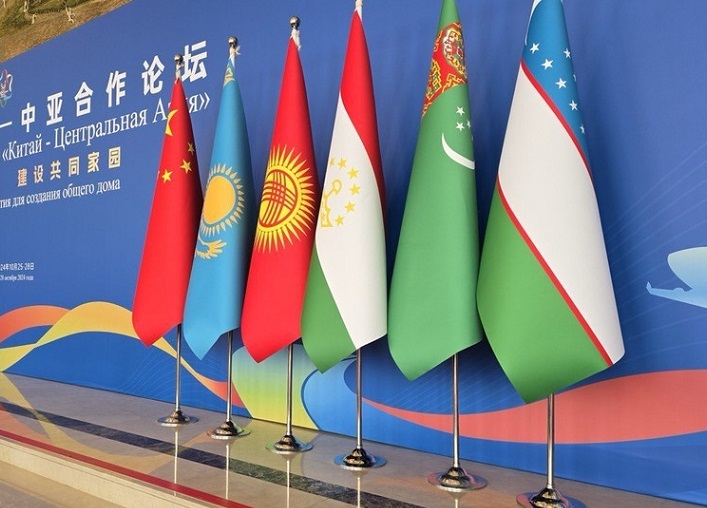
By the end of 2025, China emerged as the main trading partner of Central Asian countries — Kazakhstan, Kyrgyzstan, Tajikistan, Turkmenistan, and Uzbekistan. The total trade turnover between China and these five republics reached a record $106.3 billion, marking a 12% increase compared to the previous year, according to Xinhua, cited by “Dunyo”.
A Historic Breakthrough in Economic Cooperation
Chinese analysts note that Beijing’s cooperation with Central Asian states has entered a new qualitative stage. For the first time in history, mutual trade turnover surpassed the $100 billion mark — a figure that seemed unattainable just a few years ago.
Trade between China and the region has shown steady growth for five consecutive years. In 2021, the figure was only $49.5 billion; today, it has more than doubled. The share of Central Asian countries in China’s foreign trade also increased from 0.8% to 1.5%.
What Drives the Growth
Economists attribute the record numbers to several key factors:
- rapid expansion of cross‑border e‑commerce,
- development of logistics and warehouse infrastructure,
- introduction of joint payment systems simplifying settlements,
- the “China–Central Asia” cooperation platform integrating trade, industry, and education.
China also remains one of the region’s largest investors. Total investment has already exceeded $50 billion, and major infrastructure projects — including the China–Kyrgyzstan–Uzbekistan railway — are accelerating.
Kazakhstan Leads in Trade Volume
According to China’s General Administration of Customs, Kazakhstan became China’s most active trading partner in Central Asia in 2025, with trade exceeding $48.6 billion.
Next come:
- Kyrgyzstan — $27.2 billion,
- Uzbekistan — $16.2 billion,
- Turkmenistan — $10 billion,
- Tajikistan — $4.3 billion.
Statistical Discrepancies
It is noted that Chinese data does not always match figures from Central Asian agencies. For example, Uzbekistan’s Statistics Committee reported that its trade with China reached $17.2 billion last year — about $1 billion higher than Chinese estimates.